A Personal Reading of A Bishop Facing Mount Kenya
2 personal observations
One of the earliest things I learnt was that the death of a family member could be a reason for people to move, to leave the dead in peace. This stayed with me, and it raised questions for me. I wondered whether people did not feel the need to remain physically connected to the places where their loved ones were buried, or whether this reflected a practice of non-attachment, where memory and reverence were carried differently. Today, we often bury our loved ones where we live, hold memorials, and return to graves as a way of remembering and staying connected. Reading this made me pause and consider how understandings of land, death, memory, and belonging may have shifted over time and how care for the dead did not always mean staying close, but sometimes meant moving away.
On a very personal note, it was deeply refreshing to read names of places and families that I recognise, places I grew up around, names that feel familiar rather than historical. That familiarity grounded the book for me. It reminded me that this is not an abstract church history, but a story rooted in real soil, real communities, and lived memory.
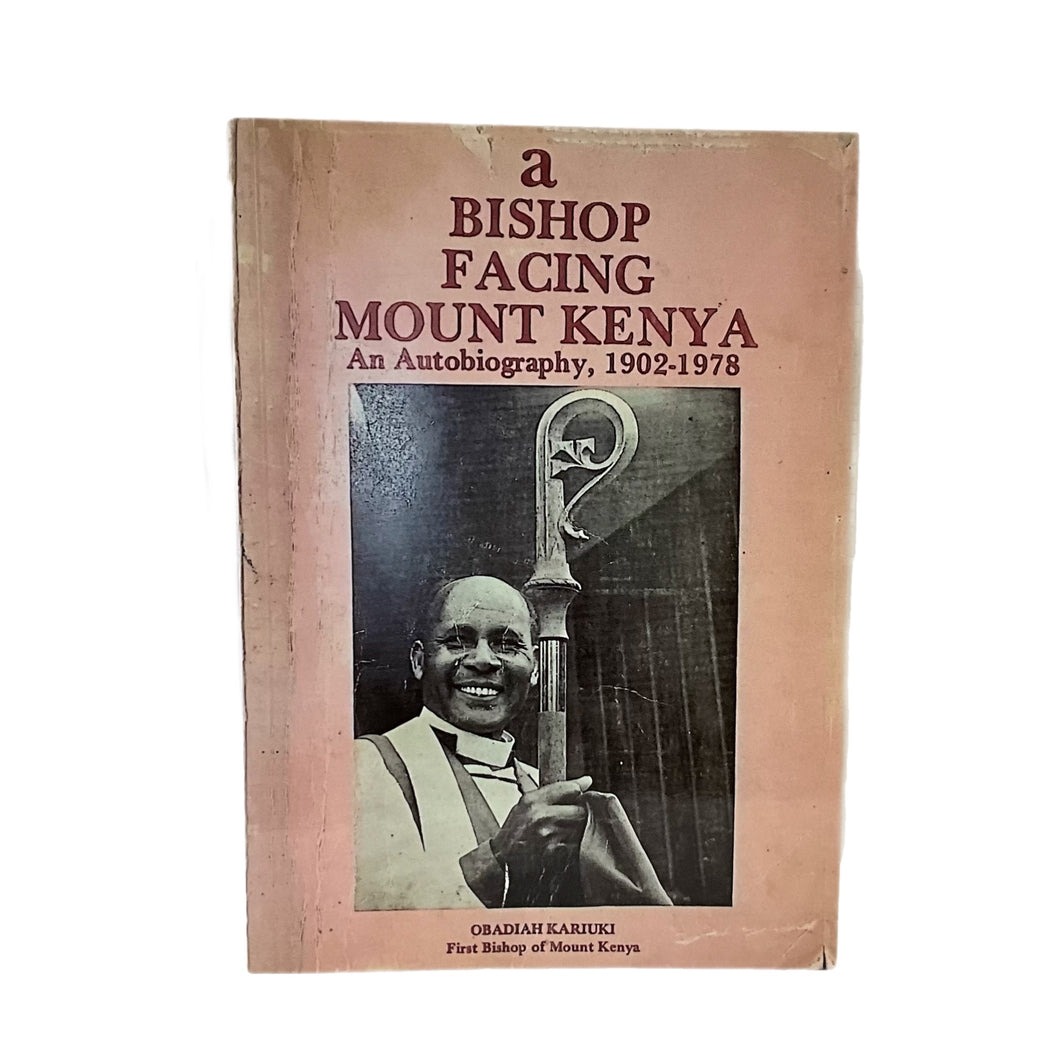
Regarding the journey of Bishop Kariuki
Several people are so key in his life and present life changing opportunities for him. For example, his uncle Joseph was significant in shaping his life very early. His introduction to Christianity, to the mission school, and eventually to people like Leakey all come through this relationship. As a boy, he is curious about what happens in church, but it is his uncle who opens the door and walks him through it. Many of his later opportunities, education, work, advancement, seem to come because he is present, attentive, and available when doors open. At several points he expresses feelings of inadequacy, especially around academic qualifications. I resonated with this. Despite these feelings, he is repeatedly headhunted and entrusted with responsibility. And when given responsibility, he performs well.
My observation is that he seems to have been at the right place at the right time and surrounded by people who opened doors for him. He works hard, he performs well, and he is noticed. But timing and guidance matter just as much as effort.
The Revival enters his life in a similar way: someone tells him about it. Once he encounters it, he responds with genuine excitement and commitment. He seems deeply moved, and he draws others in. At the same time, I did not see him making what I would call out-of-the-ordinary attempts to pursue the Revival further — for example, by travelling to Rwanda on his own initiative or by breaking away from a church structure that was clearly uncomfortable with revivalists. Instead, he remains within the same church that resists the movement, and he stays there patiently.
I appreciate the tensions because the Revival is disruptive, The institutional church resists it yet he chooses to remain inside the church. It made me think of certain questions. Please note these are not judgements
- Was his decision a choice or a survival strategy?
- Was staying within the institution a way of protecting the movement, or did it limit what it could become?
The Mau Mau period places him in an especially difficult position. As a Christian, he is not trusted by the Mau Mau. As an African, he is not trusted by the mzungu even as a converted Christian. He occupies a tense middle ground. What I see him doing here is choosing peace, restraint, and balance rather than confrontation. There is no dramatic prophetic stand in the way we might associate with figures like Martin Luther or overt anti-violence preaching. Instead, there is a quiet determination to remain human on both sides.
I did not see him deliberately seeking out non-Christian Kikuyu communities to pray with them or to show overt solidarity during the conflict years. This may have been shaped by fear, by political surveillance, or by genuine concern for safety both his own and others’. The book does not dwell there, but the absence is noticeable.
Again, this left me pausing rather than concluding. What kind of courage does it take to not take sides publicly? What is lost, and what is preserved, by choosing peace over protest in a time of violence?
Where I felt most appreciative was in his practical church leadership. His introduction of a financial quota system for parishes strikes me as thoughtful and forward-looking. His insistence on involving women in active church service feels quietly radical for his time. His concern for young couples encouraging responsibility, respect for tradition, and biblical grounding reflects a belief that social stability begins in the household.
I was also moved by how he speaks of his wife. He gives her space to make decisions, listens to her suggestions, and treats her as a partner rather than an accessory. This kind of humility appears again at his retirement event, when he interprets both rain and sunshine not as personal signs, but as God’s blessing and acceptance of the prayers of the people.
This is where his leadership is quietly radical for his time, not loud feminism — but lived respect.
His final sermon stayed with me. He tells those gathered that God has already given them all they need, a good country, and asks them to serve God fully, with their whole hearts. At the same time, I found myself wishing for more when it came to issues like alcoholism and prostitution. His response, at least as presented in the book, is largely moral exhortation, warning that disobedience (drunkedness) will block God’s blessings.
I found myself wondering whether there were attempts at prevention, pastoral care, or social intervention that are not recorded here. If not, this may reflect the limits of the church’s imagination at the time rather than a personal failure, but the question remains open for me.